Advertisement
OKX Says Australia Could Unlock $24B Digital Finance Boom With Faster Crypto Rules
- Australia could unlock $24B annually from digital finance reforms, equal to roughly 1% of GDP.
- Efficiency gains are concentrated in markets, payments and tokenised assets, led by foreign exchange.
- Without faster regulatory reform, only $1B may be realised by 2030, prompting calls for sandbox and licensing changes.
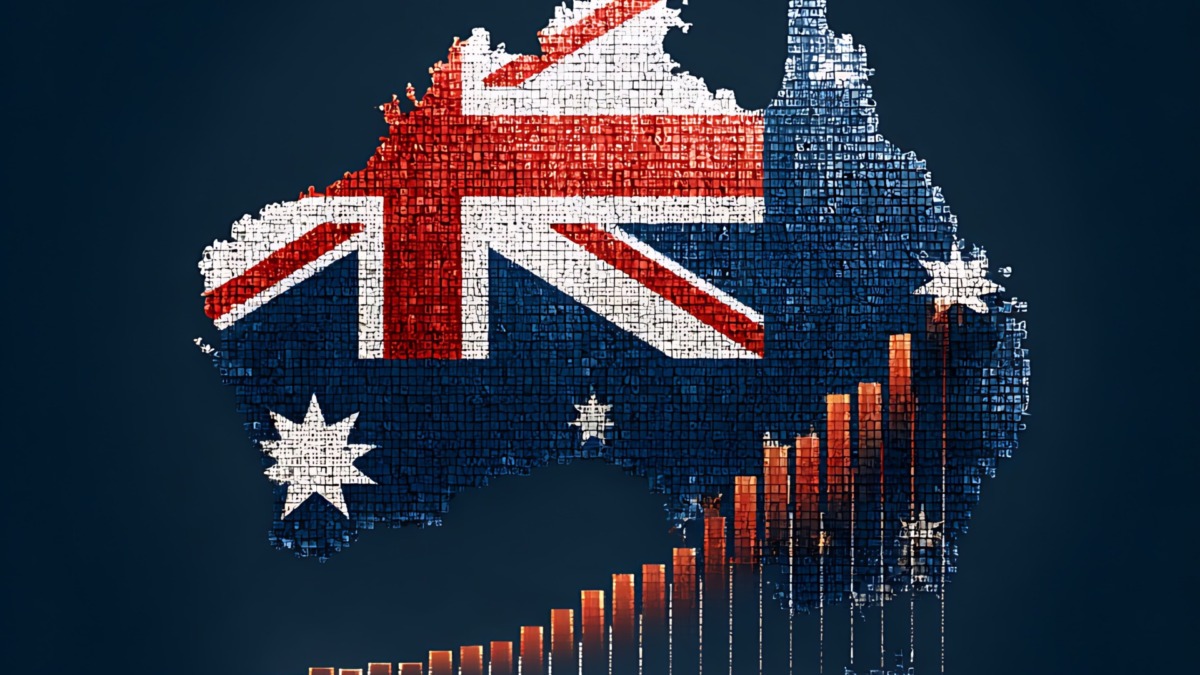
Australia risks missing out on $24 billion in annual digital finance gains unless it accelerates regulatory reform, according to research backed by OKX. The projected dividend, equivalent to about 1 per cent of GDP, is tied to advances in tokenised markets, digital payments and financial assets.
The report, produced by the Digital Finance Cooperative Research Centre with the Digital Economy Council of Australia, argues that modernising core financial infrastructure could materially improve efficiency across capital markets and payment systems. It breaks the $24 billion opportunity into three components: $10 billion from market improvements, $8 billion from payments, and $6 billion from asset-related gains.
Foreign exchange represents the largest single efficiency opportunity at $7.2 billion per year, with further gains forecast in investment funds at $2.2 billion, public debt at $1.3 billion and public equities at $1 billion.
Related: Jamie Dimon Warns Stablecoin Yield Fight Could Threaten US Financial System
The Growing Realisation Gap
Despite this modelling, the study warns that Australia is currently on track to secure only about $1 billion annually by 2030. Regulatory ambiguity, weak coordination and the absence of clear scaling pathways from pilot projects are cited as primary constraints.
Proposed remedies include a coordinated Digital Financial Market Infrastructure sandbox, reforms to tokenised market licensing and the introduction of foundational elements such as tokenised government bonds and wholesale central bank digital currency within a controlled framework.
Related: Aussie Startup Trains Living Human Brain Cells to Play Doom

Author
Rachel Lourdesamy
Rachel is a freelance writer based in Sydney with experience within financial services, marketing, and corporate communications in the APAC region. An avid reader and a graduate of the University of Sydney, she covers topics including business, finance and human interest.