Advertisement
Grayscale Says Bitcoin Is Oversold but AI Risks Cloud Outlook

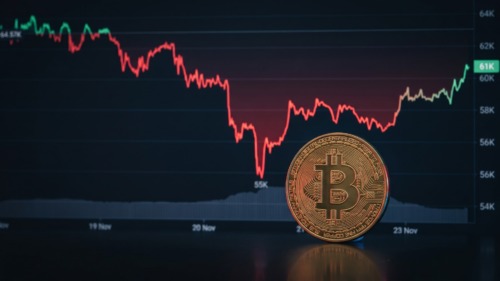
- Bitcoin fell to US$55,254, below June’s low, marking what Grayscale describes as the longest Bitcoin bear market on record at 411 days, despite a comparatively shallow 56% drawdown.
- Grayscale identified signs of an oversold market, including heavy ETP outflows, stablecoin redemptions, declining futures open interest and heightened demand for downside protection.
- AI sector uncertainty, including data centre policy concerns and Nvidia leadership turmoil, has contributed to crypto volatility and broader market instability.
- Grayscale’s Zach Pandl remains optimistic about Bitcoin’s long-term prospects, arguing that current valuations offer an attractive entry point despite near-term risks.
Bitcoin has dropped below its June low, but Grayscale thinks the selling looks overdone and that the next move may depend more on artificial intelligence than on anything happening on blockchains.
On Saturday 21 November, Bitcoin slid to US$55K (AU$83K), undercutting the previous low of US$58K (AU$87.6K) set on 30 June, Zach Pandl, Grayscale’s head of research, wrote in a recent note. The coin has since recovered some ground and was changing hands at around US$61.5K (AU$92.8K) at the time of writing.
According to Grayscale, the fall makes this the longest bear market on record, lasting at least 411 days. It’s also the shallowest, with a drawdown of 56%. Grayscale bases its calculation on Bitcoin’s October 2025 peak of US$124,824 (AU$188.5K) and Saturday’s intraday low of US$55,254 (AU$83.4K).
Signs of an Oversold Market
Pandl says both price action and money flows suggest sellers are running out of steam. Global crypto exchange-traded products (ETPs), which trade like shares, recorded more than US$2 billion (AU$3 billion) in outflows last week. Stablecoins have seen heavy redemptions, and futures open interest for Bitcoin and Ether, a measure of outstanding contracts, has slipped back to mid-year lows.
Options markets tell a similar story. The implied volatility curve is deeply inverted, meaning traders expect more turbulence soon than further out. They’re also paying a hefty premium for puts, contracts that generally gain value when prices fall.
Pandl argues that public blockchain fundamentals remain solid and that current prices offer an “attractive entry point” for anyone holding for the medium to long term.
It’s worth noting that Grayscale itself has a commercial interest in the digital asset market. The asset manager offers several crypto investment products, including spot Bitcoin and Ethereum ETFs, and earns fees from managing these investments.
AI Uncertainty Clouds the Near Term
Much of Grayscale’s short-term caution comes from uncertainty surrounding the AI industry. Pandl points to concerns over US data centre construction following the midterm elections, leadership turmoil at Nvidia, widespread outages and major developments at Anthropic, including its IPO.
The link between AI stocks and crypto prices was evident on Monday when Bitcoin climbed to US$64,505 (AU$97.4K) following Jensen Huang’s reinstatement as Nvidia’s chief executive. The market rally triggered more than US$500 million (AU$754.6 million) in crypto liquidations within four hours.
Advertisement
However, the recovery was short-lived, with Bitcoin subsequently dropping back towards US$60K (AU$90.5K).
Read more: South Korea’s Upbit and Bithumb Suspend CYBER Transfers Following Suspected Bridge Exploit
None of this makes Grayscale gloomy about the technology itself. Pandl said Grayscale’s researchers are “incredibly optimistic” about AI’s productivity benefits and the role public blockchains could play in an AI-driven financial system.
For now, though, the firm is encouraging investors to keep their eyes on the longer-term outlook when deciding how much to allocate to digital assets.

Author
Aaron Feuerstein
Aaron Feuerstein is a freelance writer based in Melbourne. His focus is on decentralised finance and the regulatory space surrounding blockchain. He holds a Master's in Accounting. When he is not studying the latest legal case, he enjoys his time as a modest but eager hobby cook.