Advertisement
Ether Heads for ‘Death Cross’
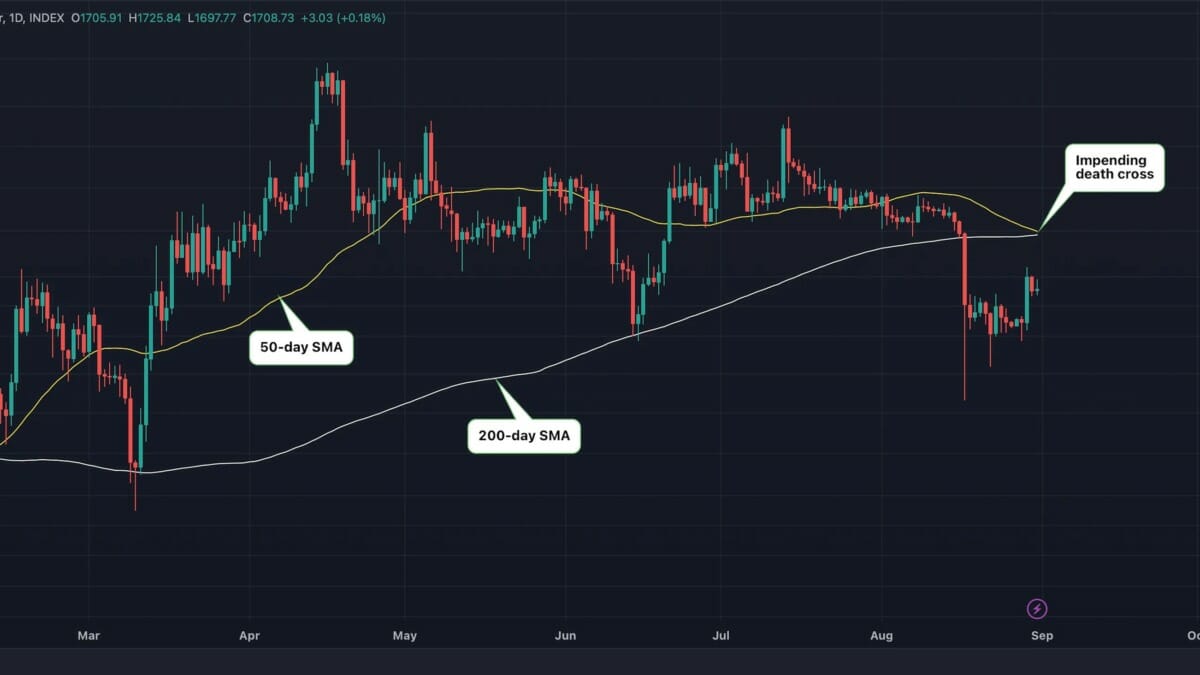
A death occurs when an asset’s 50-day simple moving average dips below its 200-day simple moving average.
:format(jpg)/cloudfront-us-east-1.images.arcpublishing.com/coindesk/WVVO3L6XGBHVDJGWWCBWMGUPOI.png)
Ether’s daily chart (TradingView/CoinDesk)
Since its inception, ether has seen six death crosses, of which only three lived up to the reputation, and the rest caught traders on the wrong side of the market.
:format(jpg)/cloudfront-us-east-1.images.arcpublishing.com/coindesk/HYDHA3EIC5ENVAFDUEBMUUHIKA.png) Death cross is not reliable as a standalone indicator. (CoinDesk/TradingView) (CoinDesk/TradingView)
Death cross is not reliable as a standalone indicator. (CoinDesk/TradingView) (CoinDesk/TradingView)
Ether nursed double-digit losses at the end of 12 months following the death cross confirmations dated April 11, 2018, Aug. 2, 2021 and Jan. 28, 2022. In other words, a trader holding a short for 12 months following the occurrence of these death cross would have made handsome returns.
On the contrary, a trader holding a short position for 12 months following the first, third and fourth death cross would have missed out on triple-digit price rallies.
Most death crosses turned out to be contrary indicators, with prices rallying and averages following suit to produce a golden cross within three to six months of the preceding death cross.
To conclude, the death cross is unreliable as a standalone indicator. That said, the impending death cross is consistent with the bearish outlook in the ether options market and lingering concerns about the slowdown in Ethereum’s network usage.
Recommended for you:
Advertisement
- Giant Bitcoin ‘Taproot Wizard’ NFT Minted in Collaboration With Luxor Mining Pool
- How the Top 1% Covers Crypto
- Winklevoss Twins Lent Their Crypto Platform Gemini $100M: Bloomberg
Ether changed hands at $1,710 at press time.
Edited by Oliver Knight.