Advertisement
U.S. Senate Unveils Crypto Oversight Draft as Australia Sounds Alarm on Falling Behind

- The US Senate Agriculture Committee released the discussion draft of its portion of the Senate’s crypto market structure legislation on Monday. The other half of the bill is controlled by the Senate Banking Committee.
- The bill defines some key terms and how some concepts interact with other legislation, particularly the Commodity Exchange Act — but much detail remains unresolved.
- Meanwhile in Australia, ASIC Chair Joe Longo has warned Australian institutions’ reluctance to innovate around digital assets and tokenisation is putting the nation’s future at risk.
The US Senate Agriculture Committee released the highly anticipated discussion draft of its part of the ground-breaking crypto market structure bill on Monday, moving the legislation one step closer to clearing the chamber and potentially passing into law.
The draft is part of the Senate’s answer to the House of Representatives’ Clarity Act legislation. Together, these legislative efforts aim to clarify precisely how regulators such as the Commodity Futures Trading Commission (CFTC) and the Securities and Exchange Commission (SEC) will share jurisdiction over crypto markets.
The draft, released by the Chair of the Agriculture Committee, Arkansas Republican John Boozman and New Jersey Democrat Cory Booker, defines some important terms such as “blockchain” and clarifies how these concepts will apply under the Commodity Exchange Act. It also directs the CFTC to work in collaboration with the SEC to establish rules around activities such as portfolio margining of securities and how regulators will deal with intermediaries.
Senator Boozman said the draft was an important step towards establishing clear rules for digital asset markets.
The CFTC is the right agency to regulate spot digital commodity trading, and it is essential to establish clear rules for the emerging crypto market while also protecting consumers. This discussion draft advances those goals and lays an important marker as we work toward final policy language.
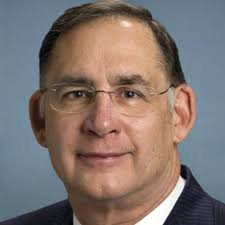 Republican Senator John Boozman
 Senator Booker, the senior Democrat involved in the development of the draft, said that protecting consumers, while continuing to allow the market to grow, was his party’s focus.
More Americans are engaging with novel financial markets and payment systems than ever before, and Congress must take steps to strengthen and expand regulatory frameworks to protect consumers from predatory practices, keep our markets safe, and prevent bad actors from exploiting regulatory gaps.
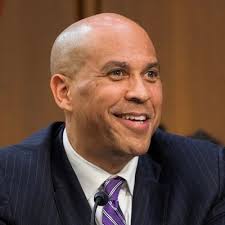 Democrat Senator Cory Booker
 Booker added: “This bipartisan discussion draft would provide the CFTC with new authority to regulate the digital commodity spot market, create new protections for retail customers, and ensure the agency has the personnel and resources necessary to oversee this growing market.”
Strange as it may seem for a committee with agriculture in its name, the Senate Agriculture Committee has jurisdiction over half the Senate’s crypto market regulation bill because it oversees the CFTC (the CFTC regulates the trading of many agricultural commodities).
- The Ag Committee’s half of the bill deals with digital asset commodities.
- The other half of the bill, which is controlled by the Senate Banking Committee, deals with digital asset securities.
The text of the draft still contains many bracketed sections, meaning negotiations over the final wording — including the definition of several key terms — continue. This suggests the lawmakers still have a lot of work to do before a final version will be ready.
One of the bracketed sections would see the CFTC have a minimum of two commissioners — currently the regulator is run by a lone acting chair, Caroline Pham, who is set to be replaced by Trump-pick, Mike Selig. No commissioners have yet been nominated; ordinarily the CFTC has five commissioners appointed by the President and confirmed by the Senate.
Related: Trump Taps Michael Selig to Lead CFTC as US Pushes Toward Crypto-Friendly Regulation
Advertisement
Australia Lagging on Digital Asset Legislation, Warns ASIC Commissioner
Meanwhile back home, chair of the Australian Securities and Investments Commission (ASIC), Joe Longo, has warned that the nation risks losing its edge in global capital markets by lagging on new legislation for digital assets markets, particularly around tokenisation of real-world assets.
Speaking at the National Press Club last Tuesday, Longo said while many governments around the world are moving quickly to establish new regulations for digital markets, Australian institutions remain “too comfortable with the status quo.”
“Australia faces a choice—to innovate or stagnate,” Longo warned. “Once, Australia was one of the early adopters of innovation in markets… Now, other countries are outpacing us.”
Longo argued that tokenisation democratises access to assets which have traditionally been the domain of institutional investors or high net-worth individuals, such as private equity or fixed-income. By fractionalising these kinds of assets, tokenisation allows them to be “broken into smaller, more affordable units, and traded quickly and securely on a global scale,” Longo explained.
One bright spot of innovation Longo noted was the Reserve Bank of Australia’s (RBA’s) pilot wholesale CBDC and tokenisation initiative, Project Acacia.
“There are some disruptors emerging in the Australian market who are doing things differently. Imperium Markets is an example, one of the players who are piloting tokenisation in debt markets as part of Project Acacia run by the RBA and the Digital Finance Cooperative Research Centre. But we’re not seeing enough of this energy and enthusiasm in significant parts of our market,” Longo said.
It’s generally the new players – fintechs – that are driving innovation and may ultimately disrupt traditional finance and market infrastructure. The RBA’s Project Acacia is evidence of that, with these innovators leading the way in developing tokenised financial markets and new settlement services.
 Joe Longo, ASIC Chair
 Related: Australia’s Crypto Sector Welcomes New Rules, but Pushes for Clearer Guidance
In the past, Longo has been pretty unenthusiastic about digital assets himself, having referred to crypto as “highly speculative” and called Bitcoin’s rise “a classic case of the bigger fool theory.”

Author
Jody McDonald
Jody is a Brisbane-based freelance writer who specialises in writing about business, technology, and the future of work.