Advertisement
Standard Chartered Sees $2 Trillion Tokenisation Boom Led by Ethereum by 2028
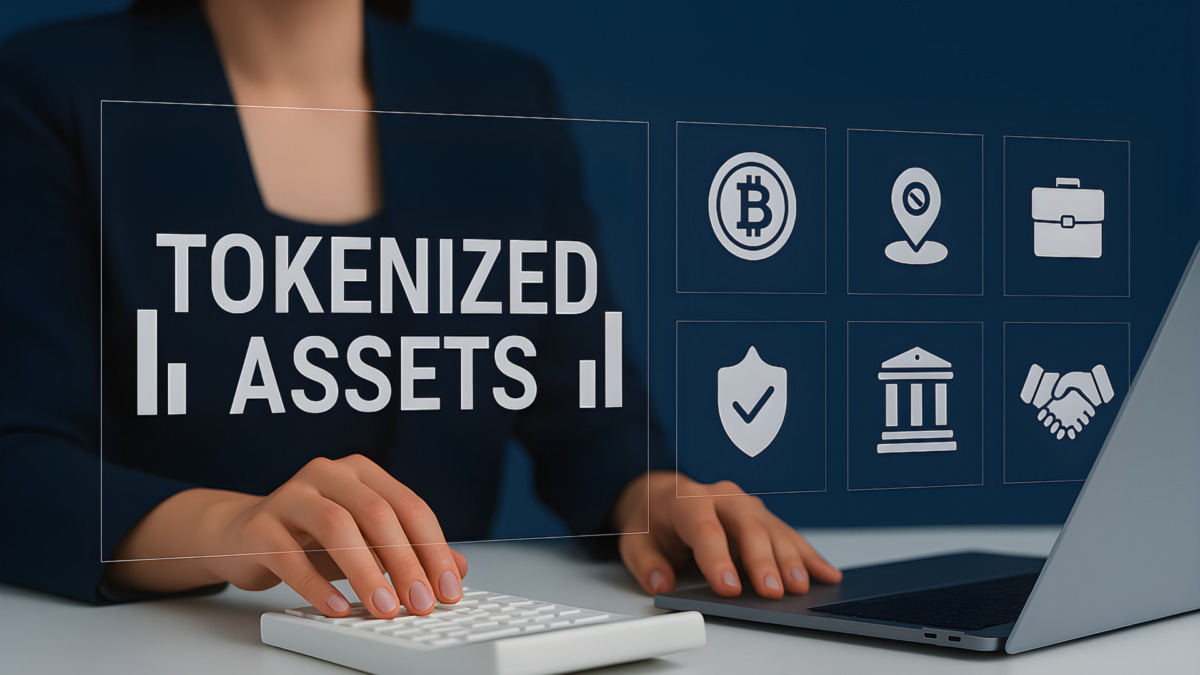
- Standard Chartered projects the value of tokenised real-world assets (excluding stablecoins) will jump 5,600% from about US$35 billion to US$2 trillion by 2028.
- This massive growth is expected to be driven by stablecoins laying the groundwork through increased awareness and the development of on-chain liquidity and DeFi.
- The US$2 trillion figure will primarily consist of tokenised money market funds and listed equities, each projected to reach US$750 billion by 2028.
Standard Chartered projects tokenised real-world assets (excluding stablecoins) to climb from about US$35 billion (AU$54.25 billion) today to US$2 trillion (AU$3.10 trillion) by 2028.
That jump — roughly a 5,600% increase — is driven by deeper on-chain liquidity and a maturing DeFi stack, according to the bank.
Related: Norway Sees 30% Surge in Crypto Declarations as Tax Push Pays Off
DeFi To Disrupt TradFi?
Geoffrey Kendrick, head of digital asset research at Standard Chartered, said in the report that stablecoins laid the groundwork for the tokenisation of other asset classes, which is now mostly done on Ethereum (ETH). And according to Kendrick, it makes sense as the network has been operating steadily for over 10 years, he said.
Kendrick’s mix skews to money market funds and listed equities by 2028, with tokenised funds and a basket of harder-to-trade assets filling the rest.
The split is money market funds at US$750 billion (AU$1.16 trillion), listed equities at US$750 billion (AU$1.16 trillion), tokenised funds at US$250 billion (AU$387.50 billion), and private equity, commodities, corporate debt, and real estate together at US$250 billion (AU$387.50 billion).
Stablecoins have laid the groundwork (via increased awareness, liquidity and lending/borrowing on-chain) for other asset classes, from tokenised MMFs to tokenised equities, to move on-chain at scale.
 Geoffrey Kendrick, Global Head, Digital Assets Research
 Integration With Banks
Kendrick believes that the stability and reach of stablecoins are enabling non-bank entities to offer payments and savings products that were once handled by traditional institutions. The bank describes a self-reinforcing cycle in which liquidity enables new products, which then pull in more liquidity and market participation.
Stablecoins have created several necessary pre-conditions for a broader expansion of DeFi via the three pillars of increased public awareness, on-chain liquidity, and on-chain lending/borrowing activity in fiat-pegged products.
Geoffrey Kendrick, Global Head, Digital Assets Research Tokenisation turns traditional instruments and tangible assets into blockchain tokens to enable faster settlement and global distribution. Put simply, it means creating blockchain-based tokens that represent ownership or rights to a specific asset — tokens that can then be transferred like any other digital value.
Related: Matt Hougan: Tokenisation – Wall Street’s Next Trillion-Dollar Revolution
The RWA market has a total value locked of about US$35 billion (AU$53 billion), according to RWA.xyz.
Advertisement

Author
José Oramas
José is a journalist and translator with a keen interest in blockchain and cryptocurrencies.