Advertisement
Proof of Stake (PoS) in Blockchain
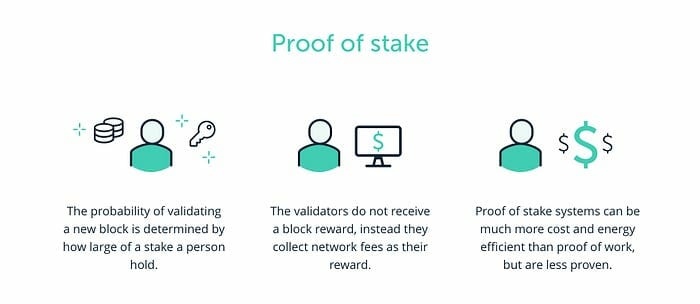
Proof of Stake (PoS) in Blockchain
Proof of Stake (PoS) is a type of algorithm aimed at achieving decentralized consensus on the blockchain. A way to reach this consensus was first proposed here by quantum mechanics, then Sunny King and his colleagues wrote a paper about it. This led to his Proof-of-Stake (PoS) based peer coin. A stake is the value/amount you bet on a particular outcome. This process is called staking. A more precise meaning of the term “insertion” will be defined later.
Why Proof-of-Stake:
Before Proof of Stake came along, Proof of Work (implemented in Bitcoin) was the most popular way to achieve decentralized consensus. However, proof of work is very energy intensive (electrical energy in bitcoin mining). A consensus mechanism based on proof-of-work therefore increases the likelihood that entities will mine new blocks if they have more computational resources. Besides his two points above, PoW-based consensus mechanisms have other weaknesses. More on this later. Proof-of-stake-based mechanisms are beneficial in such scenarios.
What is Proof-of-Stake:
As the name suggests, nodes on the network stake large amounts of cryptocurrency to become candidates for validating new blocks and earn fees for doing so. Then the algorithm selects a node from the candidate pool and validates the new block. The selection algorithm combines bet size (the size of the cryptocurrency) and other factors (coin age-based selection, randomization process, etc.) to make a fair selection for everyone on the network.
- Coin-age based selection:
The algorithm tracks how long each validator candidate node stays as a validator. The older the node, the more likely it will become a new validator.
- Random Block selection:Validators are selected using a combination of ‘lowest hash value’ and ‘highest stake’. The node with the best combination of these weights becomes the new validator.
Advantages of Pos
- Energy-efficient
As all the nodes are not competing against each other to attach a new block to the blockchain, energy is saved. Also, no problem has to be solved( as in case of Proof-of-Work system) thus saving the energy.
- Decentralization:
In blockchains like Bitcoin(Proof of Work system to achieve distributed consensus), an extra incentive of exponential rewards are in place to join a mining pool leading to a more centralized nature of blockchain. In the case of a Proof-of-Stake based system(like Peercoin), rewards are proportional(linear) to the amount of stake. So, it provides absolutely no extra edge to join a mining pool; thus promoting decentralization.
- Security:
A person attempting to attack a network will have to own 51% of the stakes(pretty expensive). This leads to a secure network.
- Weakness of a PoS mechanism:
- New technology:
PoS is still relatively new. Research is ongoing to find and fix bugs so that it can be used in live networks with real currency trading.
Advertisement
- The ‘Nothing at Stake’ problem: This problem describes the little to no disadvantage to the nodes in case they support multiple blockchains in the event of a blockchain split(blockchain forking). In the worst-case scenario, every fork will lead to multiple blockchains and validators will work and the nodes in the network will never achieve consensus.
- Variants of Proof-of-Stake:
- Regular Proof-of-Stake – The one discussed in this article.
- Leased Proof-of-Stake
- Delegated Proof-of-Stake
- Masternode Proof-of-Stake
The information provided in this Article is for general informational purposes only and should not be construed as financial advice. It is not intended to be a substitute for professional financial advice, and you should always consult with a qualified financial advisor before making any financial decisions. The user acknowledges and agrees that any actions taken based on the information provided in this chat are done at their own risk. The app and its creators disclaim any liability for any damages or losses arising from the use of this chat for financial decision-making.