Advertisement
PEELING BACK THE LAYERS OF BLOCKCHAIN

PEELING BACK THE LAYERS OF BLOCKCHAIN

Curious about how blockchain works?
Let’s learn about the different layers that make up a blockchain network and the crucial role they play in securing data and executing smart contracts.👇👇
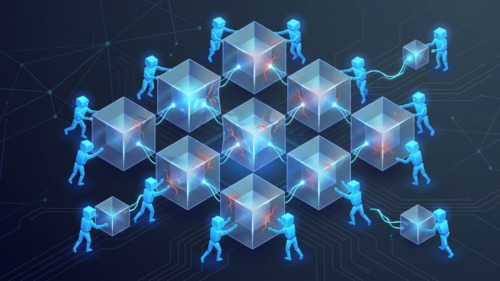
The blockchain techn is revolutionizing the way we store and transfer data by providing a secure, transparent and tamper-proof system that is not controlled by any single entity. At its core, a blockchain network consists of multiple layers that work together to ensure the network’s functionality and security.
These layers include: an application layer, a consensus layer, a network layer, a data layer, and a protocol layer, and may also include additional layers such as an off-chain scaling layer or a physical layer.
Each layer serves a unique purpose, such as defining the rules and standards for the network, enabling communication between nodes, storing and securing data and executing smart contracts and other applications. Understanding the different layers in a blockchain architecture is essential to grasp how blockchain networks function and to appreciate the potential of this transformative technology.
🎯Now let’s dive into the different layers of the blockchain:👇👇
📜APPLICATION LAYER: This is the topmost layer of the blockchain and includes the user interface and the applications built on top of the blockchain network. Examples of blockchain applications include cryptocurrencies, smart contracts and decentralized applications.
📜CONSENSUS LAYER: This layer is responsible for ensuring that all nodes on the blockchain network agree on the state of the ledger. This is achieved through consensus mechanisms such as proof-of-work, proof-of-stake and delegated proof-of-stake.
Advertisement
📜NETWORK LAYER: The network layer connects the nodes in the blockchain network and enables communication between them. The network layer uses peer-to-peer protocols such as the Bitcoin network protocol and the Ethereum Whisper protocol.
📜DATA LAYER: The data layer is where the actual data is stored in the blockchain. This includes transactions, blocks and other information related to the blockchain network. The data layer is secured through cryptography and distributed storage mechanisms.
📜PROTOCOL LAYER: The protocol layer defines the rules and standards for the blockchain network. This includes the rules for validating transactions, the format for storing data and the network protocols used for communication.
📍There are various blockchain protocols that use these layers to achieve their goals. Some popular blockchain protocols include:
🛡Bitcoin: The first and most popular blockchain protocol, Bitcoin uses a PoW consensus mechanism and is primarily used for peer-to-peer transactions and as a store of value.
🛡Ethereum: Ethereum is a blockchain protocol that enables the creation of smart contracts and dApps. It uses a PoW consensus mechanism but is transitioning to PoS.
🛡Ripple: Ripple is a blockchain protocol designed for financial institutions and enables near-instant, low-cost cross-border payments. It uses a consensus mechanism called Ripple Protocol Consensus Algorithm (RPCA).
🛡Stellar: Stellar is a blockchain protocol that also focuses on cross-border payments but is designed for individuals and small businesses. It uses a consensus mechanism called Stellar Consensus Protocol (SCP).
These are just a few examples of the many blockchain protocols that exist today, each with its own unique features and use cases.
So basically, The terms “L0, L1, L2, and L3” are sometimes used to refer to different layers in a blockchain architecture, in the next part I’ll be explaining each layers:
⛓️L0: This layer is referred to as the “base layer” or “physical layer” and includes the actual hardware and infrastructure that the blockchain runs on. This could include servers, network devices and other physical components.
⛓️L2: L2 is referred to as the “off-chain layer” or “scaling layer”. This layer is used to offload some of the workload from the main blockchain network in order to improve scalability and reduce transaction fees.
Examples of L2 solutions include payment channels, sidechains and state channels.
🎯Some L2 Protocols Include:
🔬Arbitrum
🔬Optimism
🔬Polygon
⛓️L3: L3 is referred to as the “application layer” or “smart contract layer”. This layer is responsible for defining the business logic and rules that govern the behavior of the blockchain applications. Smart contracts are the primary building blocks of this layer, and they are executed on top of the blockchain network.
📍It’s worth noting that different blockchain architectures use different layering schemes, and there is no universally accepted standard. However, the above interpretation should give you a general idea of how the terms “L0, L1, L2, and L3” might be used in the context of blockchain architecture.
To rounds it all up, the layers in a blockchain architecture serve different purposes, such as defining the rules and standards for the network, enabling communication between nodes, storing and securing data, and executing smart contracts and other applications. Different blockchain protocols may use these layers in different ways to achieve their goals, such as enabling peer-to-peer transactions, facilitating cross-border payments, or supporting decentralized applications.
Congrats, If you made it here! This has been Drey’s pen. If you learned a thing or two from this article, please show your support by giving it a like and share for more visibility.