Advertisement
Ledger Launches Open-Source AI Toolkit With Hardware-Enforced Approval for Crypto Transactions
- Ledger’s new open-source toolkit allows AI agents to manage crypto tasks without giving them access to users’ private keys.
- Every transaction must still be approved on a Ledger hardware wallet, ensuring people retain final control over fund movements.
- The framework also secures AI credentials and authentication while helping developers integrate hardware-backed security into AI applications.
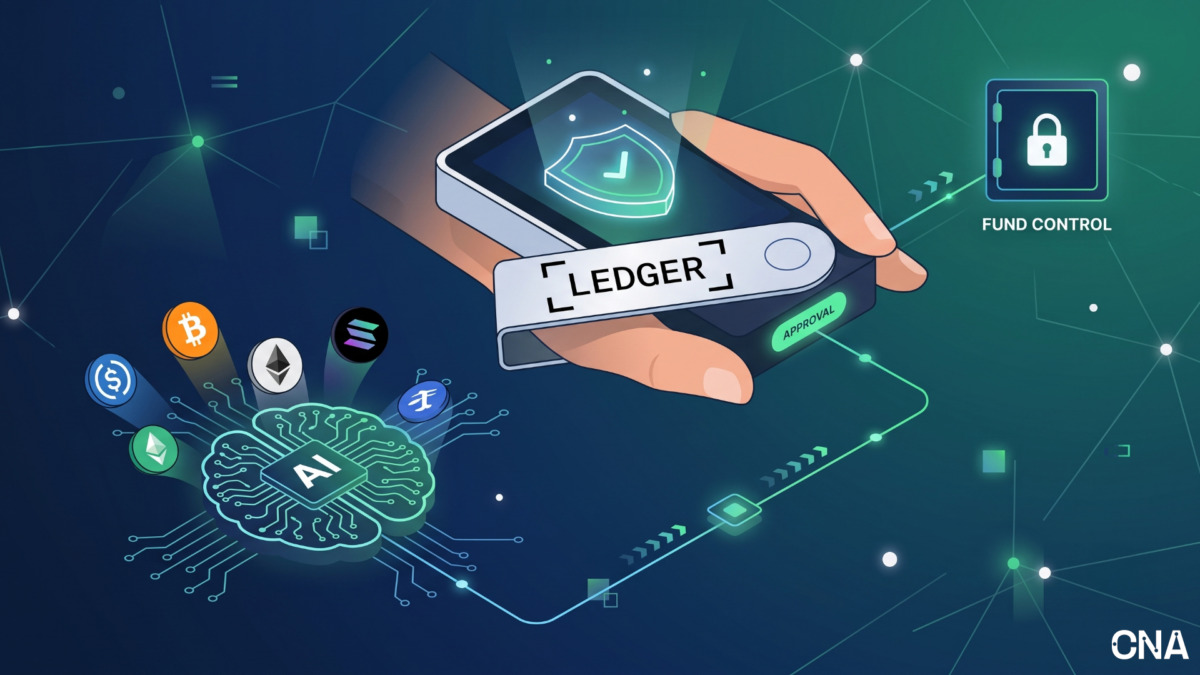
Ledger has unveiled Ledger Agent Stack, an open-source framework that allows AI agents to assist with cryptocurrency management while keeping final control over transactions in the hands of users through hardware approval.
Using the toolkit, AI agents can inspect wallet balances, review portfolios, prepare transfers and recommend payments without ever accessing or controlling private keys. Before any transaction can be completed, users must physically approve it on a Ledger hardware wallet, preventing AI agents from independently authorising movements of funds.
The release represents the first product delivered under Ledger’s 2026 AI roadmap as the company expands its hardware-based security model to address emerging risks associated with autonomous AI systems.
Related: Australia Cracks Down on AI Data Centres With Mandatory Clean Energy Rules
Designed With Security First
Ledger said the framework is built around the principle that AI agents should only propose actions, while people retain responsibility for approving them. Developers can use the toolkit to integrate Ledger support into AI applications for both individual and institutional wallets, with the hardware wallet remaining the required approval layer for sensitive operations.
The company has also broadened the platform beyond digital assets by enabling Ledger devices to securely store AI credentials and act as physical authentication keys for services including GitHub, Discord and 1Password.
The architecture is intended to protect against prompt injection and other AI-related threats by ensuring compromised AI agents cannot act independently. Under the system, an attacker who gains control of an AI agent would still require the wallet owner’s physical approval on a Ledger device before any funds could be transferred or protected information accessed.
Related: BlackRock Doubles Down on Digital Assets Despite 40% Drop in Crypto AUM

Author
Rachel Lourdesamy
Rachel is a freelance writer based in Sydney with experience within financial services, marketing, and corporate communications in the APAC region. An avid reader and a graduate of the University of Sydney, she covers topics including business, finance and human interest.