Advertisement
Coinbase Brings Regulated Prediction Markets to the Entire US
- Coinbase launched prediction markets in all 50 states on January 28, 2026, through a partnership with Kalshi, covering sports, politics, and cultural events.
- The move advances Coinbase’s “everything exchange” strategy, following its December acquisition of The Clearing Company to integrate event-based trading with stocks and crypto.
- State-level legal battles persist as a Massachusetts judge recently blocked Kalshi from offering sports contracts, ruling they require a local gaming license despite federal CFTC oversight.
Coinbase has officially entered the prediction market with event-based trading across all 50 US states through a partnership with Kalshi.
The move allows users to trade on outcomes tied to sports, politics, culture, and other real-world events directly through Coinbase’s platform.
Read more: Burry’s Back—and He’s Betting on GameStop for the Long Haul
Coinbase is treating this as part of a bigger shift beyond spot crypto trading. The company has been building toward an “everything exchange,” including stocks, tokenised assets, and more regulated trading products. It also bought The Clearing Company in December to strengthen the plumbing needed for these kinds of markets, as Crypto News Australia reported.
Legal Issues
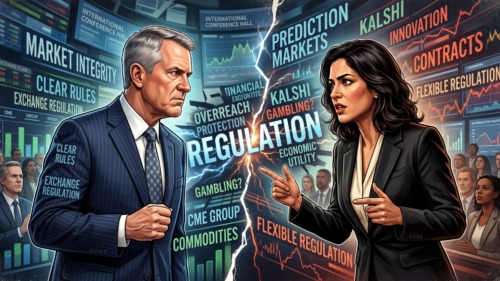
Though one of crypto’s most successful sectors, prediction markets are facing legal scrutiny.
For instance, Kalshi is overseen at the federal level by the Commodity Futures Trading Commission, but several states, including Massachusetts and Tennessee, have challenged its sports-related contracts.
State regulators say the contracts that prediction markets offer bypass local gambling rules, including age limits and gaming commission oversight.
However, Kalshi counters that its products are exchange-traded derivatives and therefore fall solely under federal commodities law. State authorities have pushed back, arguing Congress never intended CFTC regulation to override state gambling enforcement.
Similar scrutiny has followed rival platform Polymarket, which has faced questions from US lawmakers over alleged insider trading tied to geopolitical events. It was even banned in Singapore in an illegal online gambling crackdown.
Even so, Polymarket continues to secure partnerships, including a recent deal with Major League Soccer (MLS) that will integrate live prediction data into match broadcasts.
Advertisement
Read more: Crypto Laundering Scheme Lands Chinese National 46 Months in US Prison

Author
José Oramas
José is a journalist and translator with a keen interest in blockchain and cryptocurrencies.