Advertisement
Bitcoin Temporarily Slides Under $107k as US Spot ETFs See Heavy Outflows; Solana ETF Bucks the Trend

- Bitcoin traded as low as US$106,398 on Friday morning before recovering to around US$110k.
- Macro headwinds including unresolved US-China trade tensions, persistent inflation concerns, and ongoing government shutdown are weighing on investor sentiment.
- US spot Bitcoin ETFs recorded US$470.7 million in net outflows, with Fidelity’s FBTC and ARK’s ARKB experiencing the largest losses.
- Newly launched Solana spot ETF BSOL bucked the trend with three consecutive days of net inflows, including US$69.5 million on its debut trading day.
Bitcoin (BTC) dipped below the US$107k (AU$163.3k) mark in the early hours of Friday, Australian time, trading as low as US$106,398 (AU$162,432) at 6 a.m.
At the time of writing, it has recovered to around US$110k (AU$167.9k), though remains volatile.
BTC has been trading in this range for much of the second half of October, after reaching a new all-time high of US$126,198 (AU$192,680) on 7 October.
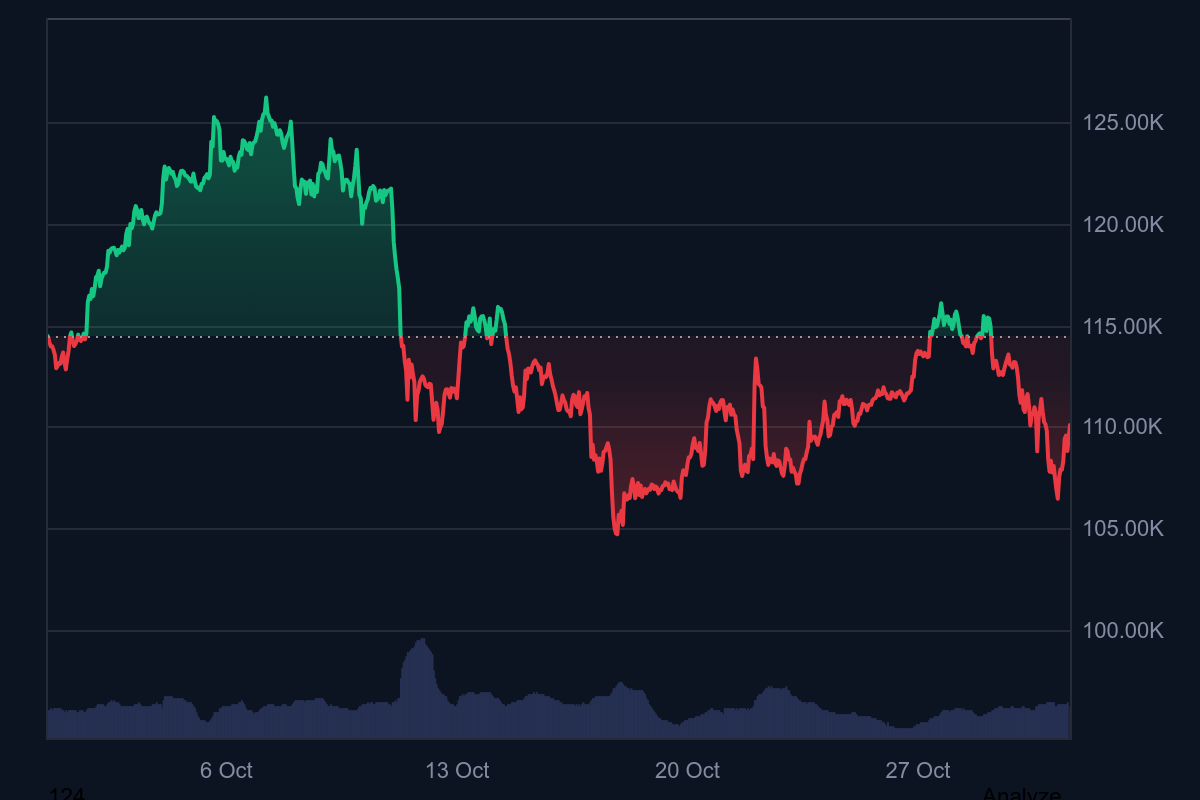
Bitcoin’s uncertain path comes despite positive developments in the US–China trade war, although no formal resolution has been reached. Investors remain wary, with inflation still a concern and Fed Chair Jerome Powell signalling uncertainty over further rate cuts in December.
The US government shutdown also weighs on traders’ minds, with some prediction markets showing strong odds that this could become the longest ever shutdown.
So, while market observers hold their breath over whether we’ll see a resolution to these macro threats, US spot Bitcoin exchange-traded funds (ETFs) continue to lose steam.
Related: Australia’s Crypto Sector Welcomes New Rules, but Pushes for Clearer Guidance
US Spot Bitcoin ETFs See Second-Largest Outflows
Yesterday, we reported US$382.6 million (AU$580.7 million) in net outflows, but updated data shows the outflows were actually worse than that.
US$470.7 million in net outflows were recorded, with Fidelity’s FBTC showing the largest loss — US$164.4 million (AU$251.1 million) — followed by ARK’s ARKB at US$143.8 million (AU$219.6 million).
The largest Bitcoin ETF — and the fastest-growing ETF in history — BlackRock’s IBIT, lost US$88.1 million (AU$134.5 million) but still holds 3.8% of all BTC, around 805,534 coins valued at US$88.46 billion (AU$135.11 billion).
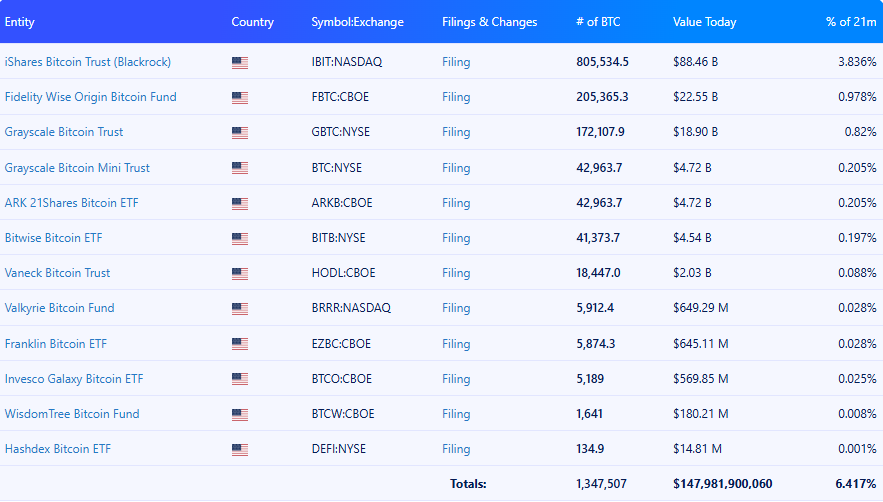
The outflow came after four straight days of inflows and is one of the biggest since US spot Bitcoin ETFs launched. It’s also October’s second-largest outflow — only 16 October saw more, with US$530.9 million (AU$811.3 million) leaving these ETFs.
Advertisement
Solana ETF Welcomed to NYSE, Extends Three-Day Inflow Streak
Other major ETFs, such as the US spot Ethereum funds, also saw outflows this week, while the Solana spot ETFs — launched on 28 October — continue to see net inflows.
The first trading day saw the largest launch-day inflows of 2025, with US$69.5 million (AU$106.1 million), while the most recent session recorded US$37.3 million (AU$56.9 million) in net inflows.
Bitwise’s BSOL fund was officially introduced on the New York Stock Exchange (NYSE) recently, with prominent guests in attendance, including Bitwise CEO Hunter Horsley and Solana Labs co-founder Anatoly Yakovenko.
Related: Bitwise Solana ETF Extends Record-Breaking Debut with US$72M in Second-Day Trading

Author
Aaron Feuerstein
Aaron Feuerstein is a freelance writer based in Melbourne. His focus is on decentralised finance and the regulatory space surrounding blockchain. He holds a Master's in Accounting. When he is not studying the latest legal case, he enjoys his time as a modest but eager hobby cook.