Advertisement
Bitcoin ETFs Draw Inflows as Gold Funds See Outflows Amid Iran War

- BlackRock’s iShares Bitcoin Trust (IBIT) recorded inflows of about 1.5% of assets since the Iran conflict began on Feb. 27, while SPDR Gold Shares (GLD) shed roughly 2.7% in outflows.
- US spot Bitcoin ETFs attracted approximately US$1.1 billion in net inflows across three trading sessions from March 2–4, led by BlackRock’s US$306.60 million contribution.
- JPMorgan reiterated a long-term Bitcoin price target of US$266,000, noting that Bitcoin’s declining volatility relative to gold signals growing institutional maturity.
In an interesting twist, investors are now moving from gold funds into US spot Bitcoin exchange-traded funds since the Iran war escalated, reversing a trend from late 2025 and marking the clearest safe-haven rebalancing since spot Bitcoin ETFs launched in 2024.
Well, at least according to JPMorgan, who said that BlackRock’s iShares Bitcoin Trust (IBIT) gained about 1.5% of assets over the period, while SPDR Gold Shares (GLD), the largest spot gold ETF, lost about 2.7%.
Keep in mind that, since launch, cumulative inflows into IBIT are now roughly double GLD’s over the same timeframe.
Read more: Polymarket Teams Up With Palantir to Monitor Sports Prediction Markets
ETF Flows Reverse Prior Trend
That shift followed months in which retail investors had been moving out of Bitcoin and into gold. Through the fourth quarter of 2025, IBIT recorded notable outflows while GLD attracted fresh capital.
Bearish positioning in IBIT also rose, with short interest increasing and its put-to-call ratio moving above GLD’s from November 2025.
The reversal became clear in early March. US spot Bitcoin ETFs drew about US$1.1 billion (AU$1.56 billion) in net inflows across three trading sessions from March 2 to March 4.
IBIT led with US$306.60 million (AU$430 million), followed by Grayscale products with US$54 million (AU$79 million), Fidelity’s FBTC with US$48 million (AU$68 million), and ARK 21Shares’ ARKB with US$14.60 million (AU$20.3 million).
Glassnode described the move as the strongest demand impulse since Bitcoin’s correction began, though it said broader accumulation still appeared tentative, with short-term holders continuing to realise losses.
Gold has continued to rise in price despite the ETF outflows, reaching US$5,400 per ounce (AU$7.6K) for a seventh straight monthly gain, its longest run since 1973.
Advertisement
Bitcoin traded in a wide range between US$62,800 (AU$87K) and US$72,600 (AU$101K) after an initial 3.8% drop briefly pushed it below US$64,000 (AU$97,920). It later rose above US$68,200 (AU$96K) after confirmation of Ayatollah Ali Khamenei’s death.
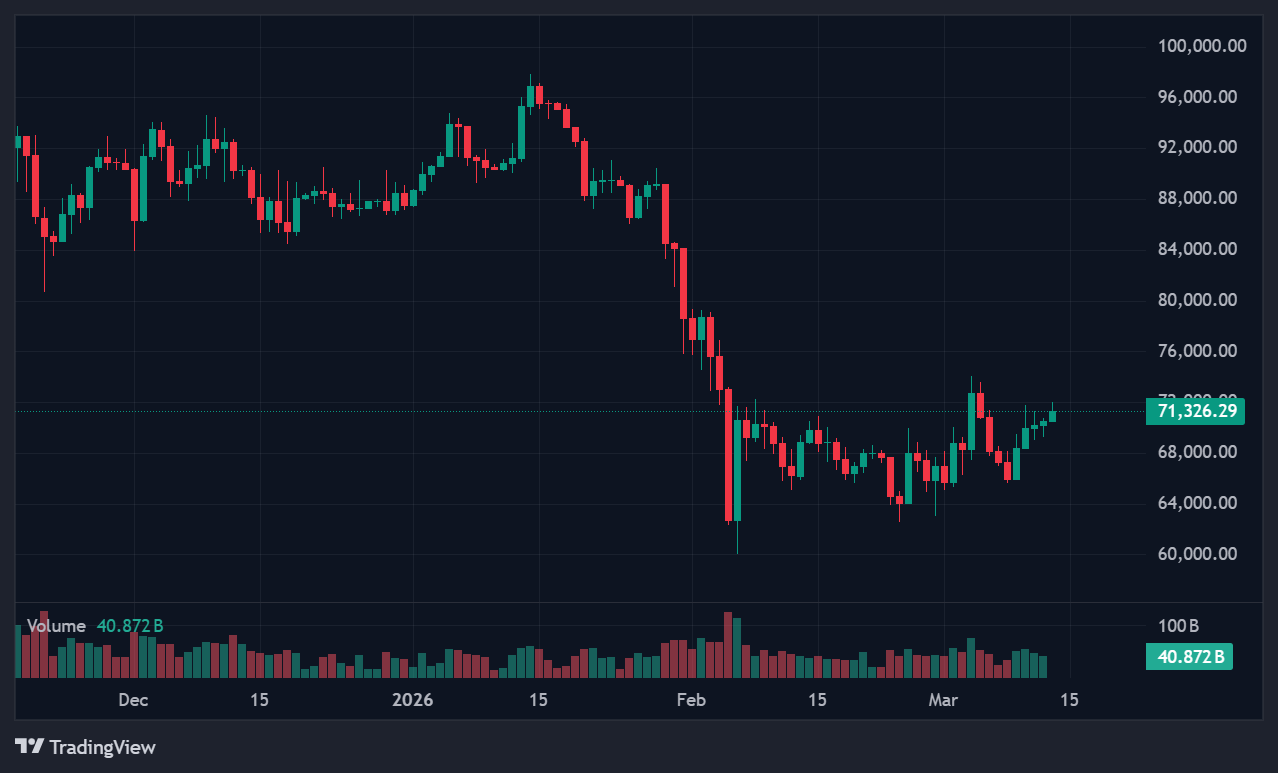
JPMorgan kept its long-term Bitcoin price target at US$266,000 (AU$406,980) and said GLD’s options-implied volatility now exceeds IBIT’s, a change it views as another sign of Bitcoin’s growing institutional maturity.
Read more: US Prosecutors Push for October Retrial of Tornado Cash Developer Roman Storm

Author
José Oramas
José is a journalist and translator with a keen interest in blockchain and cryptocurrencies.